
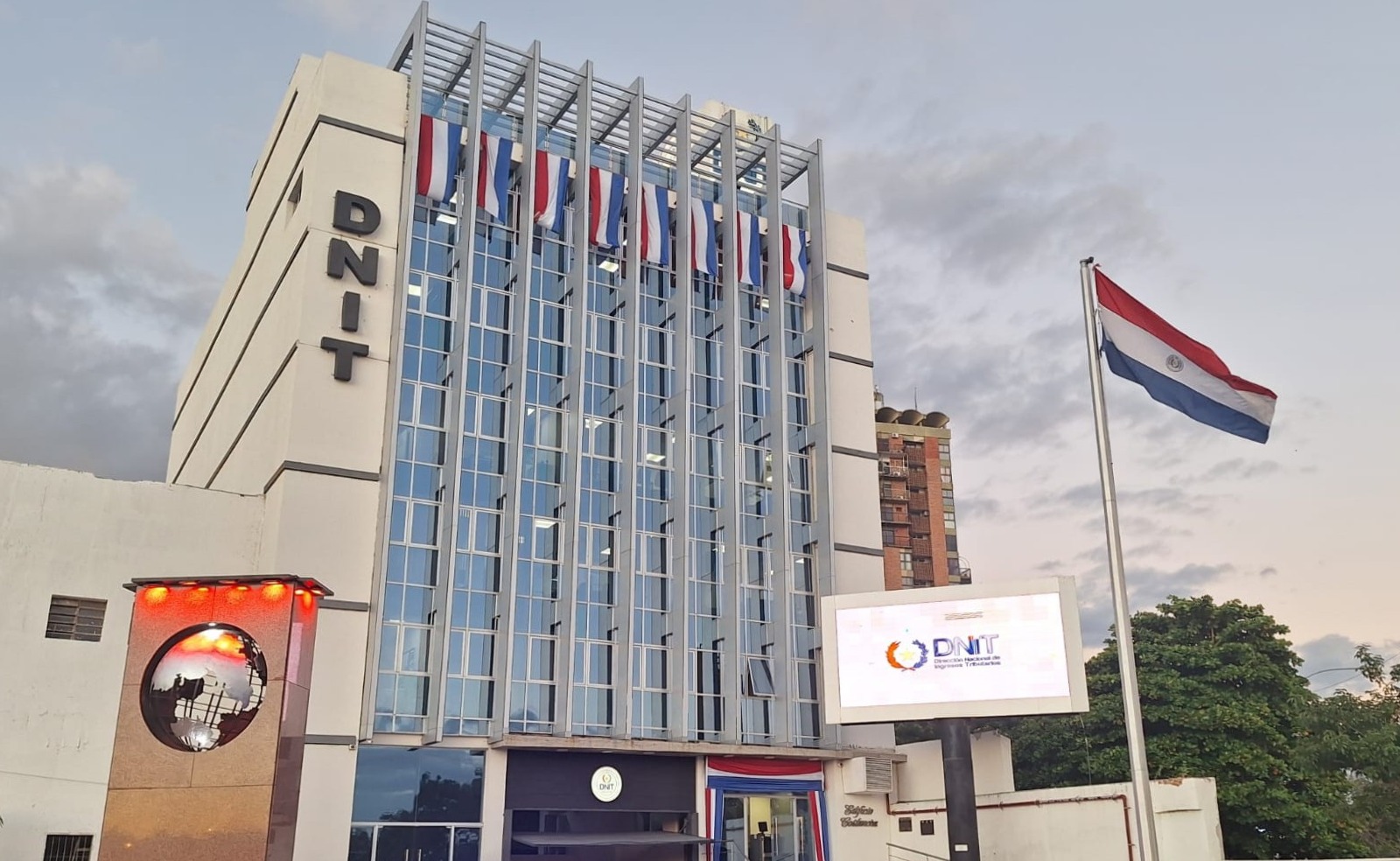
Paraguay is quietly delivering one of the strongest indicators of structural economic progress in South America: a rapidly expanding formal tax base. According to data released by Dirección Nacional de Ingresos Tributarios (DNIT), the country registered 92,450 new taxpayers in 2025, representing an 8.6% year-on-year increase and pushing the total number of registered contributors to 1,276,969 by the start of 2026.
While the headline number is impressive on its own, the underlying trend is even more significant. It reflects not a one-off surge, but a sustained and accelerating process of economic formalisation that is reshaping how Paraguay’s economy functions—and how it is perceived by investors, policymakers, and international institutions.
A multi-year expansion of the formal economy
The 2025 results build on an already strong performance in 2024, when 85,063 new taxpayers were added to the system. In practical terms, this means that 7,387 more individuals and businesses entered the formal tax framework in 2025 than in the previous year, despite a more mature base.
Since its creation in August 2023, the DNIT has overseen the registration of 212,938 new taxpayers through December 2025. For a country of Paraguay’s size, this is a meaningful shift. It suggests that formalisation is no longer confined to large corporations or urban elites, but is increasingly embraced by small businesses, self-employed professionals, and regional enterprises.
From a macroeconomic perspective, this trend improves the accuracy of national statistics, broadens the tax base without raising rates, and strengthens fiscal predictability—one of the most undervalued advantages in emerging markets.
Why taxpayer growth matters more than raw GDP
Rapid GDP growth often grabs headlines, but taxpayer expansion is a deeper, more structural signal. A growing registry indicates:
- Higher trust in institutions
- Simplified compliance procedures
- Lower barriers to entry for businesses
- A shrinking informal sector
For Paraguay, long known for its lean state and conservative fiscal model, this evolution enhances its ability to plan infrastructure, healthcare, education, and public investment—without resorting to aggressive taxation or excessive public debt.
In short, more taxpayers do not automatically mean higher taxes, but they do mean a broader, healthier economic foundation.
Urban engines driving the increase
DNIT data shows that new registrations are being led by key economic hubs, including:
- Asunción
- Ciudad del Este
- Encarnación
- San Lorenzo
- Coronel Oviedo
The presence of Asunción and Ciudad del Este is expected, given their roles as administrative and commercial centers. More telling, however, is the strong performance of cities like San Lorenzo and Coronel Oviedo, which points to a diffusion of formalisation beyond traditional business districts.
This geographic spread suggests that Paraguay’s tax reforms and administrative improvements are resonating nationwide—not just in capital-centric or export-focused regions.
DNIT’s institutional role in Paraguay’s fiscal shift
DNIT has consistently framed its mission around efficiency, transparency, and accessibility. Rather than focusing on enforcement alone, the agency has prioritised:
- Streamlined registration processes
- Digitalisation of services
- Clear communication with taxpayers
- Reduced friction for first-time registrants
This service-oriented approach appears to be paying off. The steady rise in registrations indicates that formalisation is increasingly perceived not as a burden, but as a rational step for operating within Paraguay’s evolving economy.
What this means for investors and businesses
For foreign investors, entrepreneurs, and companies considering Paraguay, the numbers send a clear signal:
- The economy is becoming more transparent
- The institutional framework is maturing
- Policy planning is increasingly data-driven
- Long-term fiscal stability is improving
Combined with Paraguay’s low tax burden, territorial taxation model, and conservative public finances, the expansion of the taxpayer base strengthens the country’s positioning as a stable, under-the-radar destination for long-term capital and residency planning.
What Paraguay’s Growing Taxpayer Base Means for the Economy and Investors
The addition of more than 92,000 new taxpayers in a single year is not merely a statistical achievement—it is a clear signal of structural transformation within Paraguay’s economy. Taxpayer growth of this scale reflects a deliberate shift away from informality toward a more transparent, rules-based economic framework. It suggests rising institutional trust, lower barriers to compliance, and a maturing relationship between the state and private enterprise.
Crucially, this expansion has occurred without aggressive tax increases or coercive enforcement, reinforcing Paraguay’s reputation for fiscal restraint and pragmatic governance. As more individuals and businesses enter the formal system, the country gains a more accurate view of its true economic activity enabling better policy design, improved public investment planning, and stronger long-term fiscal predictability.
For investors and long-term planners, these developments matter far more than short-term growth spikes. Broad-based formalisation strengthens legal certainty, reduces systemic risk, and lowers the country’s risk premium over time. This is the type of institutional progress that often goes unnoticed in headlines, yet historically precedes broader economic re-rating by international investors and capital markets.
Paraguay’s trajectory is neither speculative nor cyclical. It is quiet, incremental, and fundamentally durable—the hallmark of economies that compound value over time rather than chase temporary momentum.


Leave a Reply