
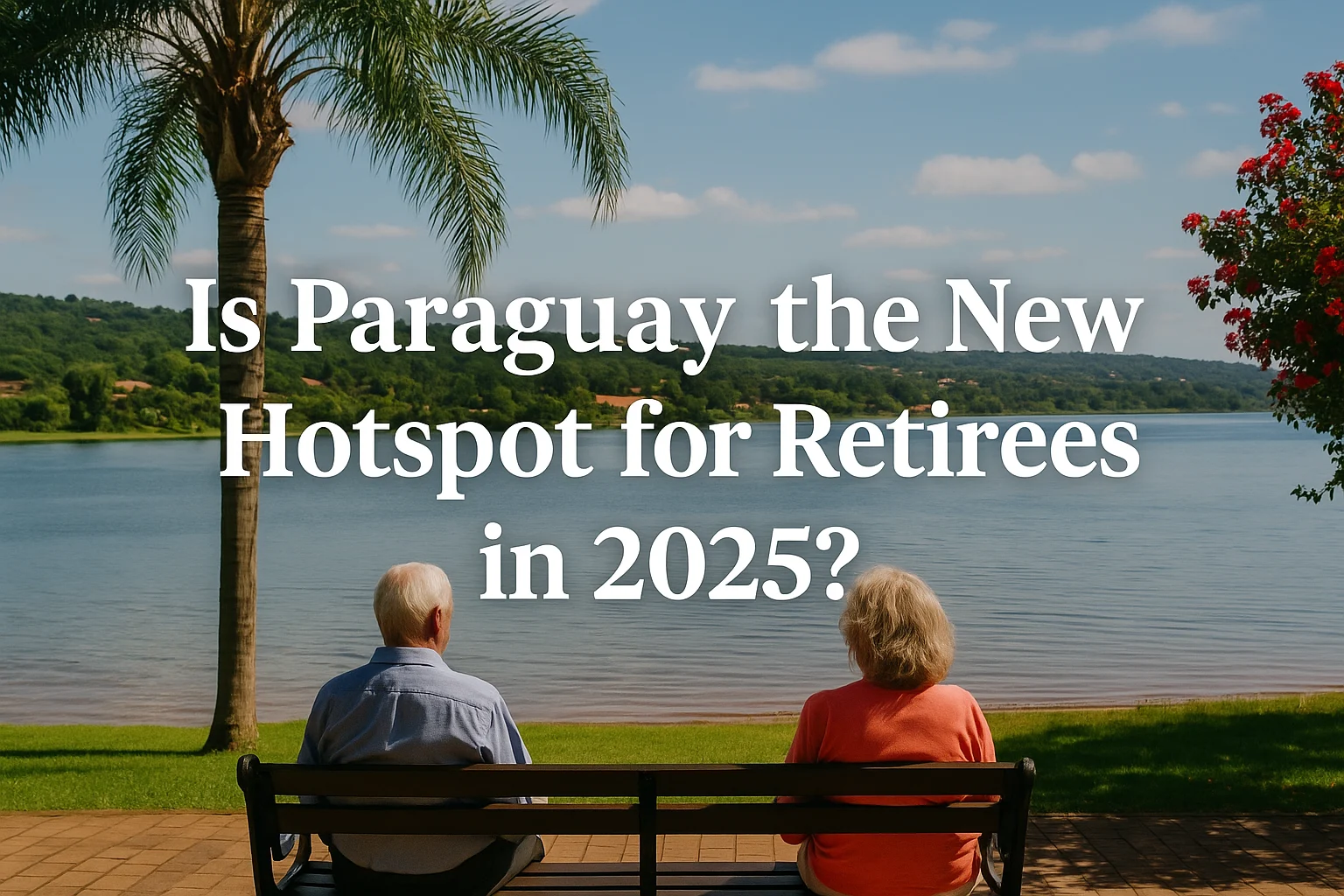
Is Paraguay the New Hotspot for Retirees in 2026?
For years, retirees have gravitated toward familiar names: Costa Rica, Panama, Portugal, or Colombia. But as these destinations become more crowded, expensive, and regulated, a quieter alternative has started to stand out.
That alternative is retiring in Paraguay.
Paraguay is not flashy. It doesn’t market itself aggressively. And that’s exactly why many experienced retirees are now paying attention. In 2026, Paraguay offers something increasingly rare: affordability without chaos, simplicity without sacrifice, and legal clarity without constant rule changes.
Tucked between Brazil, Argentina, and Bolivia, Paraguay is attracting retirees who value peace, stability, and long-term predictability over trends and hype.
If you’re looking to retire abroad without draining your pension or navigating endless bureaucracy, retiring in Paraguay may be one of the most rational decisions you can make.
Cost of Living in Paraguay: A Retirement Budget That Actually Works
One of the strongest arguments for retirement in Paraguay is the cost of living — not just low on paper, but sustainable in real life.
In 2026, retirees in Paraguay can still enjoy a comfortable lifestyle on $1,200–$1,800 per month, depending on location and preferences.
Housing Costs
In Asunción and nearby residential areas:
- Modern one-bedroom apartment: $300–$450/month
- Two-bedroom apartments or small houses: $450–$650/month
- Many buildings include security, elevators, pools, and gyms
Unlike many “retirement hotspots,” Paraguay has no inflated expat pricing bubble — locals and foreigners often pay similar rates.
Utilities & Daily Expenses
- Electricity, water, internet: $50–$80/month
- High-speed fiber internet is widely available
- Fresh produce and meat are inexpensive and high quality
- Weekly grocery costs often stay below $25–$30
Dining out remains one of Paraguay’s biggest perks:
- Local restaurants: $5–$7 per meal
- Upscale dining: still affordable by international standards
For retirees living on pensions or investment income, retiring in Paraguay allows financial breathing room, not constant budget anxiety.
Healthcare in Paraguay: Affordable, Private, and Accessible
Healthcare is a key concern when retiring abroad — and Paraguay consistently surprises newcomers.
Paraguay operates a dual system:
- Public healthcare (available to residents)
- Private healthcare (preferred by most retirees)
Private Healthcare for Retirees
- Doctor consultations: $20–$30
- Specialists available in major cities
- Short waiting times
- Many doctors trained internationally
- English-speaking physicians available in Asunción
Private health insurance in 2026 typically costs:
- $50–$100/month, depending on age and coverage
This makes retiring in Paraguay particularly attractive for retirees who want quality care without North American or European pricing.
Residency for Retirees: Simple, Predictable, and Long-Term

One of Paraguay’s biggest advantages is how straightforward the residency process remains in 2026.
Unlike many countries, Paraguay:
- Does not require large investment deposits
- Does not impose minimum income thresholds
- Does not force physical presence year-round
Residency Requirements (Typical Retiree Profile)
- Valid passport
- Clean criminal background check
- Local address in Paraguay
- Standard document translations and notarization
There is no mandatory bank deposit requirement anymore, making Paraguay particularly accessible for retirees on fixed incomes.
Most retirees complete the residency process in 3–6 months, after which they receive:
- Permanent residency
- Paraguayan cedula (national ID)
This allows retirees to open bank accounts, access healthcare, sign contracts, and live legally long term.
For many, retiring in Paraguay is one of the least bureaucratic residency paths in Latin America.
Safety, Stability & Peace of Mind
Paraguay is often overlooked — and that works in its favor.
Violent crime rates are lower than in many neighboring countries, and incidents involving foreigners are rare. While petty theft exists in urban areas, most retirees report feeling safe in residential neighborhoods.
What truly sets Paraguay apart is its low-pressure social environment:
- No mass tourism
- No protest-driven instability
- Minimal government interference in daily life
Paraguay is also:
- Outside hurricane zones
- Outside earthquake zones
- Politically stable compared to much of the region
For retirees prioritizing calm and predictability, retirement in Paraguay offers rare peace of mind.
Lifestyle, Climate & Community
Paraguay’s subtropical climate provides:
- Warm summers
- Mild winters
- Green landscapes year-round
Cities like San Bernardino, Areguá, and residential parts of Asunción are especially popular with retirees.
Culturally, Paraguay blends Spanish and Guaraní traditions. Daily life revolves around community, family, and simple routines. The tradition of tereré — shared herbal tea — reflects the country’s social warmth and slower pace.
The expat community is smaller than in Ecuador or Mexico, but steadily growing. Many retirees value this balance: enough foreigners to connect, but not so many that the country loses its identity.
🇨🇦 Story #1: Mark & Susan – From Toronto to Tranquility in San Bernardino
“We came for three weeks. We stayed for good.”
Mark (68) and Susan (65) were both retired school teachers from Toronto. After decades of teaching, commuting, and enduring Canadian winters, they dreamed of retiring somewhere warm, affordable, and peaceful. They initially planned a three-week trip through South America — with stops in Chile, Argentina, and Paraguay.
Paraguay was never meant to be the highlight.
But when they arrived in San Bernardino, something shifted. The pace was slower. People greeted them with smiles. The lake breeze, the green hills, the sound of birds — it felt like the exact kind of peace they didn’t even realize they were missing.
“We’d seen beautiful places before, but nothing that felt this livable,” Mark recalls. “And when we did the math, it was shocking. We could live here comfortably on less than half of our pension — with money left for travel and health insurance.”
Within three months, they had:
- Found a modern two-bedroom home with a garden for under $600/month
- Obtained permanent residency and cedulas with the help of a local lawyer
- Joined a small but growing expat community, full of friendly neighbors and weekly tereré meetups
Now, they spend their mornings walking by the lake, their afternoons reading or cooking, and their weekends exploring small towns and markets.
“Paraguay gave us something we didn’t even know we needed — space, warmth, and simplicity,” Susan says. “We thought we were retiring. Turns out, we were starting over.”
🇩🇪 Story #2: Claudia – From Berlin Burnout to Peace in Areguá
“In Paraguay, I finally stopped rushing.”
Claudia (62), a retired graphic designer from Berlin, was burnt out — not from work, but from life. She’d spent 40 years in the same city, paying high rent, navigating bureaucracy, and constantly feeling like life was moving too fast.
After researching alternative retirement destinations, Paraguay kept popping up — low cost of living, no extreme weather, and a reputation for calm. She booked a one-way flight and spent her first month in Asunción, then moved to the charming artistic town of Areguá.
There, she fell in love with the cobbled streets, the pottery shops, and the laid-back rhythm of local life.
“People here don’t live by the clock,” she says. “They live by the moment.”
Within six months, Claudia:
- Moved into a beautifully restored colonial-style home with a courtyard for $450/month
- Found a private doctor who spoke English and got affordable, quality care
- Started painting again — something she hadn’t done in over a decade
She now sells small watercolor pieces at local artisan fairs and spends her evenings sipping wine under the stars.
“In Berlin, I had everything – except peace. In Paraguay, I have peace first. Everything else is a bonus.”
Frequently Asked Questions About Retiring in Paraguay (2026)
Is retiring in Paraguay a good idea in 2026?
Yes. Retiring in Paraguay in 2026 remains one of the most practical options for retirees seeking affordability, legal stability, and a low-stress lifestyle. Paraguay offers permanent residency without large financial requirements, a low cost of living, affordable private healthcare, and minimal bureaucracy compared to many other retirement destinations.
How much money do you need to retire comfortably in Paraguay?
Most retirees can live comfortably while retiring in Paraguay on $1,200–$1,800 per month. This typically includes rent, utilities, groceries, healthcare, and leisure activities. Couples often report living well on under $2,500 monthly, depending on lifestyle and housing choices.
Can foreigners get permanent residency when retiring in Paraguay?
Yes. Paraguay offers one of the easiest permanent residency programs in Latin America. When retiring in Paraguay, foreigners can obtain permanent residency without mandatory investment deposits or minimum pension requirements, provided basic documentation is submitted.
Do I need to live in Paraguay full-time to keep my residency?
No. One major advantage of retiring in Paraguay is flexibility. Permanent residents are generally required to enter Paraguay only once every three years to maintain their status, making it ideal for retirees who travel or split time between countries.
Is healthcare in Paraguay good enough for retirees?
Yes. Private healthcare in Paraguay is affordable, accessible, and widely used by retirees. Many doctors are internationally trained, and private clinics in Asunción offer modern facilities. This makes retiring in Paraguay particularly attractive for retirees on fixed incomes who want reliable medical care without high insurance costs.
Is Paraguay safe for retirees?
Paraguay is considered one of the calmer and more stable countries in South America. While petty theft exists in urban areas, violent crime rates are relatively low, and incidents involving retirees or expats are rare. For many, safety is a key reason for retiring in Paraguay.
Do retirees pay tax on foreign income in Paraguay?
Paraguay operates a territorial tax system. In most cases, foreign-sourced income is not taxed locally. This is one of the major financial advantages for retirees considering retiring in Paraguay, though individual tax situations should always be reviewed with a professional advisor.
Can I buy property in Paraguay as a retiree?
Yes. Foreigners have the same property ownership rights as locals. Many retirees choose to rent initially and purchase later. Real estate prices remain affordable compared to regional alternatives, further supporting the appeal of retirement in Paraguay.
What is the best city to retire in Paraguay?
Popular locations for retirees include:
- Asunción – best healthcare and services
- San Bernardino – lakeside living and relaxed pace
- Areguá – artistic, historic, and calm
The best choice depends on lifestyle preferences, but all are well-suited to those retiring in Paraguay.
Is Paraguay good for English-speaking retirees?
While Spanish is the primary language, many professionals in healthcare and legal services speak English, especially in Asunción. The expat community is growing, and most retirees report that language barriers are manageable when retiring in Paraguay, particularly with basic Spanish.
How long does the residency process take for retirees?
Most retirees complete the residency process in 3–6 months. With professional assistance, the process can be smooth and predictable. This efficiency is another reason retiring in Paraguay is gaining attention in 2026.
Is Paraguay better than Panama or Costa Rica for retirement?
For retirees focused on affordability, simplicity, and privacy, retiring in Paraguay often offers better long-term value. Unlike Panama or Costa Rica, Paraguay has lower living costs, fewer regulatory changes, and less pressure from mass tourism.
Can I bring my spouse or family when retiring in Paraguay?
Yes. Paraguay supports family residency applications. Spouses and dependents can be included in the same process, making retiring in Paraguay a viable option for couples and families planning long-term relocation.
What type of retirees benefit most from retiring in Paraguay?
Paraguay is ideal for retirees who value:
- Financial efficiency
- Legal clarity
- Calm environments
- Personal autonomy
Those seeking nightlife, luxury branding, or heavy expat infrastructure may prefer other destinations, but for rational, long-term planners, retiring in Paraguay is an excellent fit.
Retiring in Paraguay is not about trends or hype. It’s about choosing a country that allows retirees to live comfortably, legally, and peacefully — without overpaying for the privilege.
Considering Retiring in Paraguay? We Help You Do It the Right Way
Retiring in Paraguay is not about chasing trends — it’s about making a legally sound, long-term decision that protects your lifestyle, finances, and peace of mind.
At Get Residency Paraguay, we specialize in helping retirees and expats navigate the entire residency process in Paraguay — from first consultation to your permanent residency and cedula.
How We Help Retirees in Paraguay
- ✔️ Residency strategy tailored specifically for retirees
- ✔️ Full legal assistance with permanent residency applications
- ✔️ Document preparation, translations, and local filings
- ✔️ Support with cedula, address registration, and banking access
- ✔️ Guidance on healthcare options, housing, and settling in Paraguay
We work locally, understand the current immigration framework, and focus on clarity, compliance, and long-term stability — not shortcuts.
Why Retirees Choose to Work With Us
- Deep, on-the-ground knowledge of Paraguay’s residency system
- Transparent process with no unrealistic promises
- Experience assisting North American and European retirees
- Practical guidance beyond paperwork — real relocation support
If you’re serious about retiring in Paraguay in 2026, professional guidance makes all the difference.
👉 Contact Get Residency Paraguay to explore your residency options and start your retirement journey with confidence.


Leave a Reply