
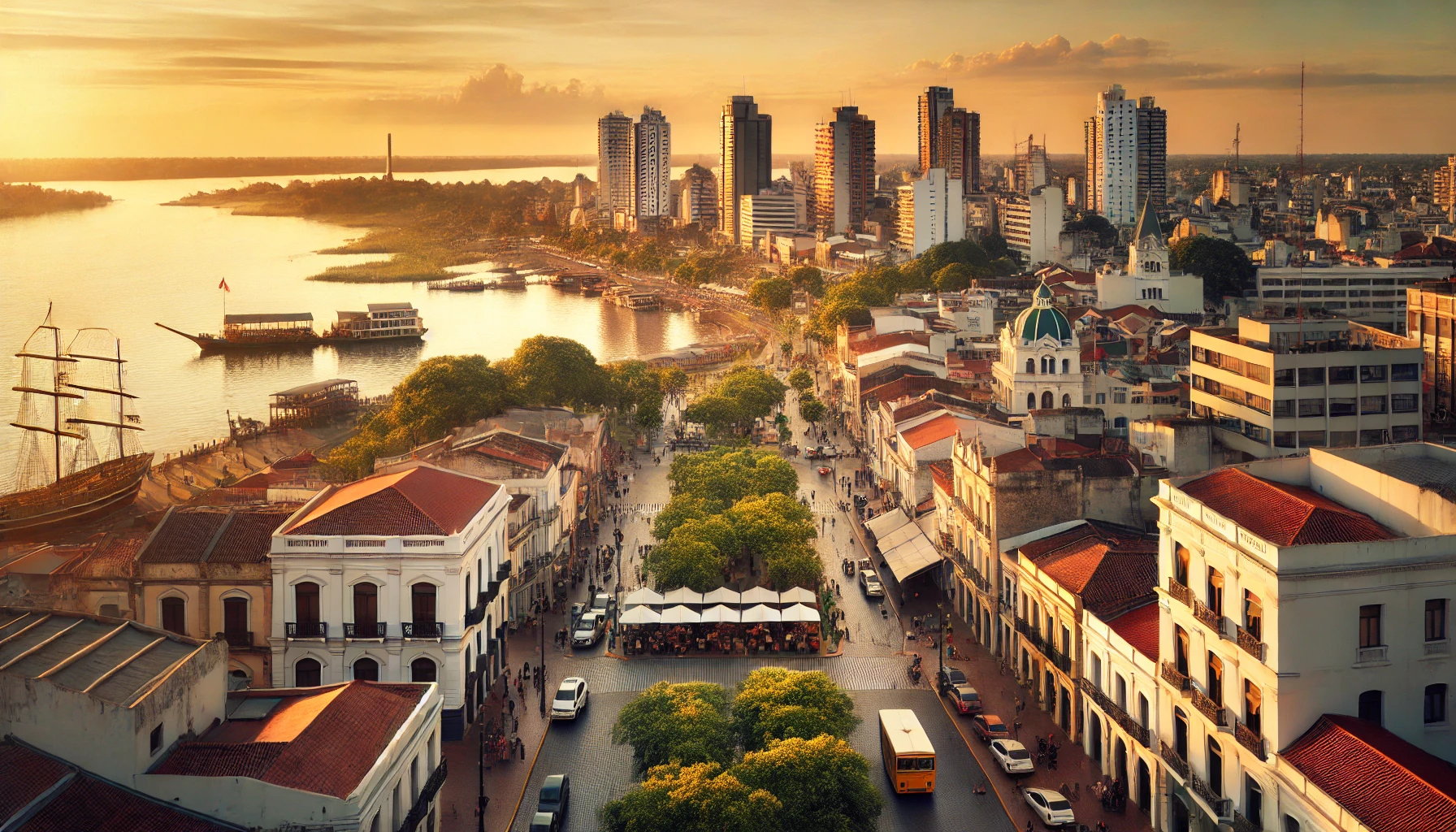
By Get Residency Paraguay | Updated 2026
Paraguay has quietly entered the global relocation conversation — not through lifestyle marketing, influencer narratives, or tourism campaigns, but through a combination of structural advantages that appeal to a specific type of expatriate: those prioritizing cost efficiency, legal certainty, and long-term optionality over short-term lifestyle optics.
Unlike regional peers such as Argentina or Brazil, Paraguay does not attempt to sell itself. That absence of narrative is precisely what has drawn attention from investors, remote professionals, and internationally mobile individuals seeking jurisdictions that still function on fundamentals rather than hype.
The question, however, remains straightforward: Is Paraguay actually worth moving to in 2026?
Paraguay’s Position in the Global Expat Landscape
Paraguay is not a lifestyle destination in the Mediterranean sense, nor does it compete with Mexico or Portugal in terms of expat density or cultural export. Instead, it occupies a quieter, more pragmatic position.
Its appeal lies in three structural pillars:
- Territorial taxation
- Low fixed costs
- Relatively accessible legal residency
For globally mobile individuals fatigued by regulatory tightening in Europe and rising costs across North America, Paraguay represents an alternative that remains institutionally simple and economically forgiving.
Cost of Living: Competitive, but Context-Dependent

Paraguay is often described as “cheap.” This is imprecise.
A more accurate characterization is that Paraguay is cost-efficient, provided expectations are aligned with local realities.
In Asunción, the country’s political and economic center, monthly living costs for a single expat typically fall into the following ranges:
- Functional lifestyle: USD 900–1,200
- Comfortable expat lifestyle: USD 1,400–2,000
- Imported Western lifestyle: Comparable to Southern Europe in select categories
Housing remains the largest differentiator. Modern, well-managed apartment buildings in prime neighborhoods command prices closer to international standards, while local housing stock remains inexpensive but often fails to meet expat expectations regarding insulation, noise, or maintenance.
The key insight: Paraguay rewards adaptation, not replication.
Residency: No Longer “Easy,” Still Accessible
For years, Paraguay’s residency program was marketed as one of the simplest globally. That narrative is outdated.
Regulatory tightening has eliminated shortcuts and introduced clearer income and documentation requirements. Nevertheless, when viewed comparatively, Paraguay remains among the least restrictive permanent residency options in Latin America.
Residency today is best understood not as a loophole, but as a process-driven legal pathway that favors applicants who prepare properly and operate within defined frameworks.
Processing takes place domestically, requires apostilled documentation, and typically involves professional legal support. For qualified applicants, timelines remain reasonable by international standards.
Taxation: Structural Advantage, Not a Tax Haven
Paraguay’s territorial tax system is frequently misunderstood.
The country does not tax foreign-source income, provided it is genuinely generated outside Paraguay. Local income, employment, and business activities are taxable.
This distinction matters.
Paraguay is not a zero-tax jurisdiction. It is, however, one of the few countries globally where tax exposure can be cleanly aligned with economic substance, making it attractive for remote professionals, international investors, and individuals restructuring their global footprint.
Poor planning leads to disappointment. Proper planning leads to clarity.
Safety and Daily Reality
Paraguay’s safety profile is often oversimplified.
Violent crime rates are lower than in several neighboring countries, but security is highly location-dependent. Expats who select modern buildings in established districts report a stable and predictable daily experience. Those who underestimate neighborhood dynamics often encounter friction.
As with most emerging markets, safety in Paraguay is less about national statistics and more about micro-location decisions.
Real Estate: A Market Driven by Fundamentals
Paraguay’s real estate sector lacks the speculative excess seen in more publicized markets. Price appreciation has been gradual, demand is localized, and financing remains conservative.
This is not a market for rapid flips or aggressive leverage. It is a market that rewards:
- Long-term holding
- Proper due diligence
- Realistic yield expectations
Foreign ownership is permitted without restriction, but professional guidance remains essential due to variations in building standards, management quality, and zoning practices.
The Trade-Offs Most Expats Underestimate
Paraguay’s limitations are not hidden – they are structural.
- Bureaucracy is slow
- English is not widely spoken
- Service quality varies dramatically
- Summer heat is extreme
- Infrastructure development is uneven
For some, these factors are deal-breakers. For others, they are acceptable trade-offs for reduced costs, regulatory simplicity, and long-term autonomy.
Who Paraguay Is and Is Not For
Paraguay works best for:
- Long-term planners
- Investors and remote professionals
- Individuals comfortable operating outside expat bubbles
- Those prioritizing optionality over convenience
It is less suitable for:
- Short-term lifestyle migrants
- Those requiring high-touch public services
- Individuals unwilling to adapt culturally or linguistically
Final Assessment: A Quietly Rational Choice
Paraguay is not an aspirational destination. It does not sell a vision of reinvention, nor does it compete on lifestyle imagery, cultural export, or international prestige. Instead, it operates on a far less fashionable, but increasingly scarce set of attributes: functional legality, cost discipline, and structural predictability.
For the right profile of expat – disciplined, globally aware, and structurally minded Paraguay remains one of the more rational relocation options available in 2026. Its value proposition is not built around promise, but around absence: the absence of excessive leverage, the absence of regulatory volatility, and the absence of narrative-driven policymaking.
In a global environment where residency pathways are narrowing, tax frameworks are tightening, and living costs in legacy destinations continue to rise, Paraguay offers something understated yet meaningful: room to operate. It allows individuals to simplify rather than optimize, to reduce friction rather than chase upside, and to design long-term arrangements without constant rule changes.
This is not a country for those seeking instant gratification or social validation. Paraguay rewards patience, preparation, and restraint. It penalizes unrealistic expectations and superficial comparisons.
Its appeal lies not in what it promises, but in what it deliberately does not overpromise – and in 2026, that restraint has become a feature, not a flaw.
Q&A / FAQ: Expats in Paraguay (2026)
1) Is Paraguay a good country for expats in 2026?
Paraguay is a strong option for expats who value lower costs, simpler lifestyle, and long-term residency options. It’s less “plug-and-play” than Mexico or Portugal, but for people who prioritize budget, flexibility, and calm, it can be a great fit.
2) What are the biggest pros of living in Paraguay?
The most common advantages are affordable living, low day-to-day stress, friendly people, and more space for your money (housing, services, lifestyle). Many expats also like that Paraguay is less crowded and less regulated than many Western countries.
3) What are the biggest cons of living in Paraguay?
The main downsides are bureaucracy, inconsistent service standards, limited English outside expat bubbles, and healthcare that varies by clinic and city. Some expats also miss big-city variety (events, international dining, etc.).
4) Is Paraguay safe for foreigners?
Generally yes — with normal big-city precautions. Most expats feel comfortable in the right neighborhoods, but like anywhere, safety depends on where you live, routines, and basic street awareness.
5) Where do most expats live in Paraguay?
Most expats choose Asunción and nearby areas due to services, healthcare, dining, and international community. Popular zones are typically the more modern, higher-demand neighborhoods where you have better infrastructure and building standards.
6) How much money do you need to live comfortably in Paraguay?
It depends on lifestyle, but many expats find Paraguay attractive because you can live well on significantly less than in North America or Western Europe. Your biggest variables are housing standard, private healthcare, schooling (if kids), and how “international” your lifestyle is.
7) Is Paraguay cheap or just “cheaper than the US/EU”?
Both. Essentials and services are often cheaper, but imported goods, premium apartments, and international-brand items can be priced closer to global levels. Paraguay feels “cheap” when you live locally; it feels “mid-priced” when you try to replicate a fully Western lifestyle.
8) Can foreigners buy property in Paraguay?
Yes. Foreigners can buy property, and many do. As always: do proper due diligence (title, building rules, taxes, legal structure) before purchasing.
9) Is Paraguay good for remote work / digital nomads?
It can be, especially in Asunción where internet and coworking options are better. The key is choosing a reliable building/location, having backup connectivity, and setting expectations: Paraguay is improving, but it’s not Singapore.
10) Do you need Spanish to live in Paraguay?
You can start without Spanish, but long-term it helps a lot. Many services work with basic Spanish; outside expat circles, English can be limited. Even simple Spanish dramatically improves quality of life (appointments, admin, repairs).
11) What’s the expat community like?
It’s smaller and more “tight-knit” than in Mexico or Spain. Many expats are long-term and relationship-driven, so networking is often through Facebook groups, referrals, and local meetups rather than massive expat districts.
12) Is healthcare good in Paraguay?
Private healthcare can be solid in main cities, but quality varies by provider. Most expats rely on private clinics and choose housing that’s close to good medical facilities.
13) Is Paraguay a good place to raise kids?
It can be, depending on schooling and your expectations. Families often focus on safe neighborhoods, building amenities, and proximity to international/private schools.
14) How hard is it to get legal residency in Paraguay?
Residency is one of the main reasons expats consider Paraguay. The process can be straightforward with correct documents and local support, but timelines and requirements can vary – the key is proper preparation and compliance.
15) Can you open a bank account as a foreigner?
Often yes, but requirements vary by bank and your residency status. Many expats say banking is easier once you have local documentation and proof of address/income.
16) Is Paraguay good for starting a business?
Paraguay can be attractive for entrepreneurs because operating costs can be lower and the market is still developing. The tradeoff is that you need patience for admin processes and you should set up proper legal + accounting from day one.
17) What’s daily life actually like in Paraguay?
Daily life is usually calmer: more routine, more relationship-based service, and less rush. If you like big-city intensity, you may find it slow; if you like breathing room, it can be a big upgrade.
18) What do expats wish they knew before moving to Paraguay?
Most commonly:
- bureaucracy takes time
- reliable housing/building choice matters a lot
- Spanish changes everything
- imported lifestyle costs add up
- you’ll enjoy it more if you don’t compare it daily to “how things work back home”
19) Is Paraguay better than Uruguay / Argentina / Brazil for expats?
It depends on priorities. Paraguay often wins on cost and simplicity; Uruguay can win on institutions and predictability; Argentina can win on culture and lifestyle (but can be volatile); Brazil can win on scale and variety (but can be more complex).
20) Is moving to Paraguay “worth it”?
For many expats: yes – if you want lower costs, a slower pace, and long-term flexibility. If you need perfect infrastructure, fully English services, or non-stop entertainment, you may be happier elsewhere.
About Get Residency Paraguay
Get Residency Paraguay is an advisory platform focused on legal residency planning, real estate structuring, and long-term relocation strategy in Paraguay.
We do not operate as a sales-driven migration agency. Our work is advisory by design – grounded in legal reality, market data, and on-the-ground experience rather than promotional narratives.
Our clients typically come to us after realizing that relocation is not a lifestyle experiment, but a structural decision with long-term legal, financial, and personal consequences. Residency status, tax exposure, asset location, and property ownership are interconnected variables. Addressing them separately often leads to costly mistakes.
Our role is to ensure that these decisions are made coherently and defensibly.
What We Actually Do
We assist expats, investors, and internationally mobile individuals with:
- Paraguay residency planning
From document preparation to local filing and compliance, with realistic timelines and requirements – no shortcuts, no myths. - Real estate advisory
Helping clients distinguish between lifestyle purchases and investment-grade assets, and avoid common traps related to building quality, zoning, and yield assumptions. - Relocation structuring
Aligning residency, taxation logic, banking access, and long-term personal strategy into a single, consistent framework. - Market reality checks
Paraguay is not for everyone. Part of our value lies in telling clients when it is not the right jurisdiction for their goals.
Our Philosophy
We prioritize:
- Realism over marketing
- Compliance over shortcuts
- Long-term sustainability over short-term convenience
Paraguay offers genuine structural advantages – but only when approached with correct expectations and proper preparation. We do not promise outcomes we cannot control, and we do not sell Paraguay as a universal solution.
Relocation works best when it is treated as a strategic reallocation of risk, cost, and optionality — not as an emotional escape.
Is Paraguay Right for You?
Paraguay can be an excellent choice for those seeking:
- Legal residency outside the EU or North America
- A territorial tax framework
- Lower fixed living costs
- Real estate ownership without excessive restrictions
- A calmer, less narrative-driven environment
It is less suitable for those who require highly developed public infrastructure, English-first administration, or a dense expat ecosystem.
Understanding this distinction before moving is critical.
Need Help With Your Move to Paraguay?
If you are considering Paraguay seriously – whether for residency, real estate, or long-term relocation — we invite you to approach the process strategically.
We work with a limited number of clients and focus on cases where Paraguay genuinely aligns with long-term objectives.
📩 Contact Get Residency Paraguay to discuss whether Paraguay fits your profile — and how to structure the move correctly if it does.
Relocation is a structural decision.
We help ensure it is made on structural grounds.
Would you move to Paraguay? Let us know in the comments.
Contact us to discuss your goals and receive expert guidance tailored to your needs.


Leave a Reply