
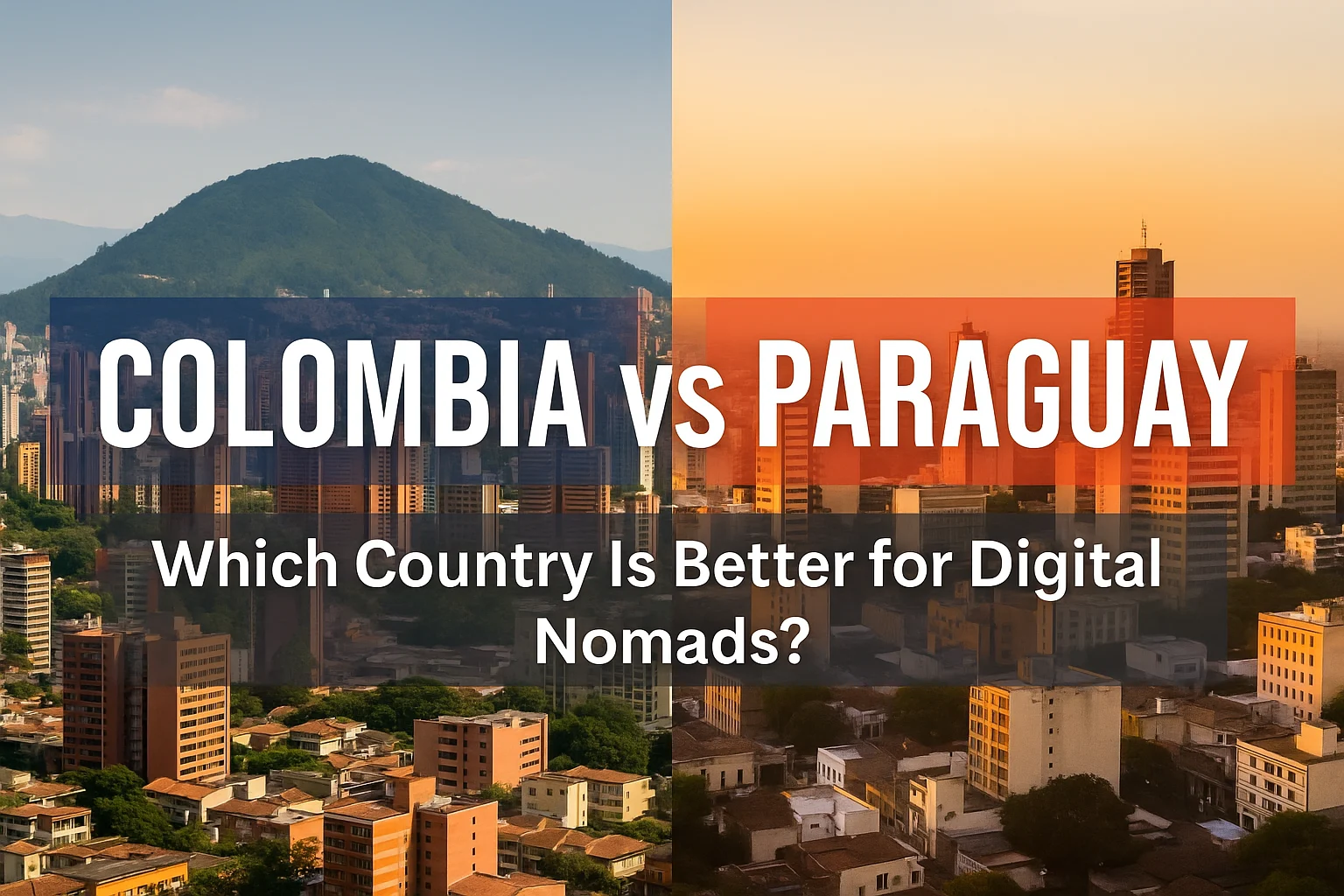
Introduction: Why Digital Nomads Are Re-Evaluating Colombia in 2026
Colombia has dominated the digital nomad map of Latin America for years. Medellín became a global hotspot, Bogotá built a solid startup ecosystem, and coastal cities like Cartagena attracted location-independent professionals looking for sun, culture, and affordable living.
But in 2025–2026, the conversation is quietly shifting.
An unexpected contender is emerging in South America’s digital nomad landscape: Paraguay.
Often ignored due to its low media exposure and lack of hype, Paraguay is now attracting a very specific type of digital nomad — those who value low costs, safety, legal stability, and long-term residency options over nightlife and constant stimulation.
So when comparing digital nomads Colombia vs Paraguay, which country truly makes more sense today?
This guide delivers a real, experience-based comparison — covering Numbeo cost of living comparison, internet quality, safety, visas, lifestyle, and long-term viability — so you can make an informed decision.
This guide offers a high-level, strategic comparison of digital nomads in Colombia vs Paraguay, focusing not on hype, but on cost efficiency, safety, legal residency, infrastructure, and long-term sustainability.

When it comes to cost of living in Paraguay vs Colombia, the difference is significant — especially for digital nomads looking to stretch their budget without sacrificing comfort.
Let’s start with the basics: housing. In Paraguay’s capital, Asunción, you can rent a fully furnished modern studio apartment in a secure building with a gym and pool for as little as $300–$400/month. In comparison, a similar apartment in a trendy area of Medellín — like El Poblado or Laureles — will typically set you back $600–$800/month.
But rent is just the beginning. Day-to-day expenses are also noticeably lower in Paraguay:
| Expense | Asunción (Paraguay) | Medellín (Colombia) |
|---|---|---|
| Coffee (cappuccino) | $1.50 | $2.50–$3.00 |
| Lunch at café | $3.50–$5.00 | $6.00–$9.00 |
| Coworking (monthly) | $80–$120 | $130–$180 |
| SIM card + 5GB data | $3.00 | $7.00–$10.00 |
| Local transport ride | $0.40 | $0.70 |
These numbers make Paraguay a clear winner for budget-conscious travelers, freelancers, and digital nomads who want to live well without burning through their savings.
Another often-overlooked bonus? Utilities in Paraguay (including electricity, water, and high-speed fiber internet) rarely exceed $50/month, even in a one-bedroom apartment. Groceries are fresh, locally grown, and affordable — a week’s worth of fruit, vegetables, rice, and meat can easily cost under $25.
Sure, Colombia offers more international options and a bigger expat scene, but for those who prioritize value for money, Paraguay is one of the cheapest countries to live in South America without compromising on safety, climate, or digital infrastructure.
Internet & Coworking Scene Paraguay and Colombia
One of the most important factors for any digital nomad is reliable internet and access to productive workspaces — and here’s where Colombia and Paraguay show some key differences.
Let’s start with Colombia. Cities like Medellín, Bogotá, and Cali offer a mature infrastructure for remote workers. You’ll find plenty of coworking spaces — including major international names like WeWork and Spaces — as well as local favorites like Selina, Atomhouse, and Co-Work Latam. High-speed internet is widely available in most urban areas, with average speeds between 100–300 Mbps in top neighborhoods.
Colombia’s digital nomad scene is also vibrant and well-established. You’ll find regular networking events, tech meetups, and remote work communities — especially in Medellín, which has become a hub for freelancers and entrepreneurs from around the world.
But what about coworking in Paraguay?
While the scene is smaller, Paraguay is catching up fast, especially in Asunción. Internet speeds have improved significantly over the past few years, and fiber-optic internet is now widely available in modern apartments and coworking spaces. Average speeds in Asunción range between 70–150 Mbps, which is more than sufficient for Zoom calls, uploading content, or managing online businesses.
Coworking spaces in Paraguay are fewer, but growing. Local options like The Hub, Ofi Espacio, or Work & Go offer affordable monthly memberships (starting at around $80/month), fast Wi-Fi, and quiet working environments — without the hustle and distractions of bigger coworking hubs.
Mobile internet is also cheaper in Paraguay. A prepaid SIM with 10GB of data costs as little as $5, and coverage across urban areas is reliable.
While Colombia wins in terms of community and infrastructure, Paraguay provides a calmer, more affordable work environment for digital nomads who don’t need a bustling tech scene to stay productive. If your work requires fewer in-person meetups and more focused deep work, Asunción’s growing coworking scene and fast internet may surprise you.
Lifestyle & Safety
For digital nomads, it’s not just about Wi-Fi speeds or rental prices — it’s about feeling safe, comfortable, and inspired by your surroundings. And when it comes to lifestyle and safety, Colombia and Paraguay offer two very different experiences.
Paraguay is often described as one of the most underrated and peaceful countries in South America. The overall vibe, especially in Asunción, is calm, relaxed, and family-oriented. There’s less noise, less traffic, and far fewer crowds than in most Colombian cities. This slower pace of life makes Paraguay ideal for nomads who are looking to focus on work, recharge, and enjoy a sense of everyday stability.
In terms of safety, Paraguay has a strong reputation — especially when compared to larger Latin American countries. While petty crime exists (as it does everywhere), violent crime is relatively rare, and most expats report feeling safe walking in central neighborhoods, even after dark. Local people are known for being warm, respectful, and welcoming to foreigners, especially when you make an effort to engage with the culture.
Now let’s look at Colombia.
Cities like Medellín and Bogotá are energetic, creative, and exciting. The nightlife is buzzing, the food scene is top-tier, and there’s always something going on. But with that energy also comes some risks. While many areas are perfectly safe, certain neighborhoods are best avoided — especially at night. Robberies and scams can happen, and newcomers need to stay aware of their surroundings.
The contrast is clear:
- Colombia offers a fast-paced, culturally rich lifestyle — great for extroverts, networkers, and social nomads.
- Paraguay provides a quieter, safer environment, perfect for focused remote work, peaceful living, and lower stress levels.
If you’re asking, “is Paraguay safe for digital nomads?”, the short answer is yes — particularly compared to other countries in the region. Combine that with a pleasant subtropical climate, affordable wellness options, and a slower rhythm of life, and it’s easy to see why more nomads are choosing Paraguay as their long-term base.
Visa & Immigration
One of the biggest considerations for digital nomads choosing their next destination is how easy it is to stay legally — short or long term. And here’s where Paraguay shines, especially compared to more bureaucratic countries in the region.
Let’s start with Colombia. For many nationalities (including U.S., Canadian, EU, and most Latin American passports), Colombia offers 90 days of visa-free entry, with the option to extend for another 90 days — giving you up to 180 days per calendar year. While this works for short-term stays, it’s not ideal for nomads who want to settle longer or avoid visa runs. The country does offer digital nomad visas, but they often require proof of income, health insurance, and additional documentation — and processing times can be slow.
Now compare that to Paraguay, which offers one of the most accessible long-term residency programs in South America.
Digital nomads, entrepreneurs, or remote workers can apply for residency in Paraguay with minimal paperwork and no need for large investments. In fact, the process is so straightforward that it’s become a popular strategy for expats looking to establish a legal base with long-term stability.
Here’s how it works:
- You arrive in Paraguay (typically visa-free for most Western and Latin American citizens).
- You apply for permanent residency, which can be processed in a matter of months.
- Once approved, you’re eligible to apply for your cedula — a national ID card that allows you to open bank accounts, register property, and live like a local.
Best of all, this residency doesn’t require you to live full-time in Paraguay. Many nomads use it as a “Plan B” or home base while continuing to travel throughout Latin America.
If you’ve ever Googled digital nomad visa Paraguay or Paraguay residency for foreigners, you’ve likely come across expat blogs praising how refreshingly simple the system is compared to countries like Brazil, Argentina, or even Colombia.
Bottom line:
- Colombia is great for short-term stays, but long-term life there requires more planning and paperwork.
- Paraguay offers one of the easiest, most flexible residency options on the continent — making it ideal for digital nomads who want to plant roots, even if part-time.
Things to Do / Culture / Weekend Trips
When choosing your next digital nomad base, it’s not just about where you work — it’s also about how you spend your weekends. Whether you’re into hiking, exploring local culture, or quick regional getaways, both Colombia and Paraguayoffer unique experiences — but they cater to different types of travelers.
Colombia is a country of contrasts. You’ve got the Caribbean coastlines of Cartagena and Santa Marta, the Andes mountains surrounding Bogotá and Medellín, and the vibrant energy of cities filled with music, art, and nightlife. Weekend trips might include paragliding in San Gil, hiking the Cocora Valley, or surfing in the Pacific.
By contrast, Paraguay offers a more off-the-beaten-path, nature-centric experience — perfect for travelers seeking authenticity and tranquility over crowds and nightlife.
So, what to do in Paraguay as a digital nomad?
Here are a few highlights:
- Visit the peaceful town of Areguá, famous for its art, handicrafts, and relaxed vibe — just 30 minutes from Asunción.
- Explore the Ybycuí National Park, home to waterfalls, lush jungle, and scenic hiking trails.
- Discover Jesuit Ruins in Encarnación, a UNESCO World Heritage Site offering a glimpse into Paraguay’s colonial past.
- Unwind at the beaches of San Bernardino or along the shores of Lake Ypacaraí.
- Enjoy weekend getaways to nearby countries: flights from Asunción to Buenos Aires, São Paulo, or Montevideoare often under $100 round trip.
Culturally, Paraguay is rich but understated. The lifestyle revolves around family, local traditions, and tereré culture — the cold yerba mate drink shared in parks and plazas. You won’t find giant music festivals or international art shows here, but you will find genuine hospitality, low tourist traffic, and the chance to connect deeply with local life.
So while Colombia offers more in terms of major tourist attractions and diverse geography, Paraguay shines with its simplicity, authenticity, and peaceful charm — perfect for nomads who value slow travel and real connection over Instagrammable hotspots.
What Digital Nomads Say
Still not sure whether Colombia or Paraguay is the better choice for digital nomads? Sometimes the most valuable insights come not from data — but from the people actually living the lifestyle.
Here’s what some real remote workers and travelers have said after experiencing both countries:
“I was surprised by how underrated Paraguay is – I pay half of what I did in Bogotá and feel safer here.”
– @RemoteRider, Reddit
“Colombia is fun, especially Medellín, but I found it hard to fully relax. Asunción might not have the same buzz, but it feels more stable, more livable long term.”
– SarahNomads, YouTube comment
“I used to think Paraguay had nothing going on until I actually spent a month there. Great food, super kind locals, and I got more work done in 4 weeks than in 3 months in Colombia.”
– JulianTravels, Expat Forum
“If you’re looking for parties and fast-paced life, go to Colombia. But if you’re serious about focus, low costs, and minimal distractions – Paraguay wins.”
– DigitalDrift, Nomad Facebook Group
“Paraguay feels like what Medellín used to be 10 years ago – affordable, authentic, and full of opportunity.”
– @LauraGlobal, X (formerly Twitter)
These kinds of stories highlight a clear pattern: Paraguay may not be on every digital nomad’s radar yet — but those who go tend to stay longer than planned.
FFinal Thoughts: Digital Nomads Colombia vs Paraguay — Which Choice Makes Sense in 2025–2026?
When comparing digital nomads Colombia vs Paraguay, the conclusion is less about which country is “better” — and more about which one aligns with your priorities, work style, and long-term strategy.
Colombia continues to attract digital nomads who thrive on energy and social density. If your ideal setup includes a vibrant nightlife, an established international nomad community, frequent networking events, and large-scale coworking hubs, Colombia — particularly cities like Medellín and Bogotá — remains a strong option. It excels as a short- to mid-term destination for extroverted remote workers who value stimulation and community.
Paraguay, on the other hand, appeals to a different — often more experienced — profile of digital nomads. For those prioritizing low cost of living, personal safety, daily stability, and legal simplicity, Paraguay consistently outperforms expectations. Its calm lifestyle, reliable infrastructure, and one of the easiest residency pathways in Latin America make it especially attractive for nomads planning longer stays or a permanent base.
From a strategic perspective, the digital nomads Colombia vs Paraguay comparison increasingly favors Paraguay in 2025–2026. As traditional nomad hubs become more expensive and regulated, Paraguay stands out not because it is trendy, but because it is efficient, predictable, and sustainable.
Paraguay is not designed to impress at first glance. Instead, it rewards those who think long term — optimizing for time, money, focus, and legal security. And for many digital nomads, that makes it one of Latin America’s most underrated — and smartest — choices.


Leave a Reply