
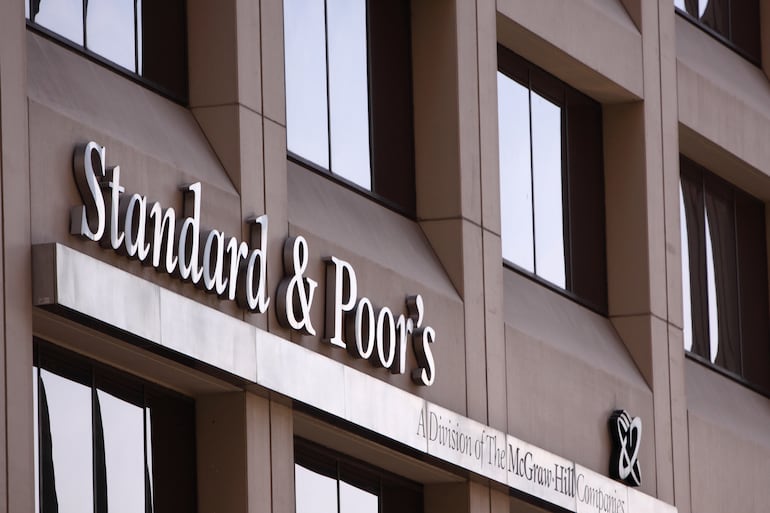
When a country crosses the threshold into investment-grade status, the implications extend far beyond sovereign bond markets. It marks a change in how global capital is allowed to behave. Paraguay’s recent upgrade by Moody’s Investors Service and Standard & Poor’s places the country into a fundamentally different risk category for institutional investors — pension funds, insurance companies, sovereign wealth funds, and global real estate allocators who are legally restricted from investing in non-investment-grade jurisdictions.
For Paraguay, this is not a cosmetic reclassification. It represents a structural re-rating that alters capital access, pricing discipline, and long-term development incentives. For real estate investors, the question is not whether this will “boost prices” in the short term, but how it will reshape demand, liquidity, and valuation frameworks over the coming cycle.
Why Paraguay Received Investment-Grade Status
Paraguay’s upgrade to Baa3 (Moody’s) and BBB- (S&P) reflects a convergence of macroeconomic fundamentals that have been building quietly for years rather than a sudden policy pivot.
Macroeconomic consistency over spectacle
Unlike many emerging markets, Paraguay has followed a conservative fiscal and monetary path. GDP growth has averaged 4–5% annually, not through credit expansion or commodity windfalls alone, but through disciplined public finances and export-driven sectors such as agriculture and energy.
Public debt remains low by regional standards, and — critically for rating agencies — predictable. Paraguay has avoided the debt-fuelled populism that has undermined fiscal credibility elsewhere in Latin America.
Monetary stability and institutional credibility
Inflation has been relatively contained, the central bank has maintained credibility, and the currency has avoided the extreme volatility seen in neighbouring economies. This matters because credit ratings are not forward-looking narratives; they are assessments of institutional reliability under stress.
In simple terms, Paraguay demonstrated that it can absorb external shocks without destabilising its financial system.
Business environment and tax simplicity
Paraguay’s low-tax, territorial system, combined with limited regulatory friction for foreign capital, reinforces its appeal to long-term investors. Importantly, this framework has remained stable across political cycles — a key factor for credit agencies assessing policy continuity rather than reform promises.
What Investment-Grade Status Actually Changes
Investment-grade status does not trigger an immediate capital flood. What it does is remove barriers.
Large pools of capital that were previously prohibited from entering Paraguay can now allocate — slowly, selectively, and with a focus on risk-adjusted returns. This tends to affect real estate markets in three phases:
- Institutional reconnaissance – feasibility studies, local partnerships, pilot projects
- Selective deployment – commercial, logistics, and prime residential assets
- Market repricing – compression of risk premiums rather than speculative price spikes
Paraguay is now entering phase one.
Implications for Paraguay’s Real Estate Market
A shift in the type of capital, not just volume
Historically, Paraguay’s real estate market has been driven by:
- local buyers,
- regional capital (notably from Argentina and Brazil),
- high-net-worth individuals seeking capital preservation.
Investment-grade status introduces a different investor profile: institutional and semi-institutional capital with longer time horizons, lower return expectations, and a preference for scale, transparency, and governance.
This does not immediately inflate prices — but it does raise the floor under valuations.
Asunción as the primary beneficiary
As with most countries at Paraguay’s stage of development, capital will concentrate first in the capital city. Asunciónalready accounts for the majority of:
- formal rental demand,
- premium residential supply,
- office and mixed-use development.
Investment-grade status strengthens Asunción’s position as the country’s financial and administrative anchor. Secondary cities may benefit later, but the re-rating effect will be most visible where liquidity already exists.
Key Real Estate Trends to Watch in 2025
1. Larger, more disciplined development projects
Access to cheaper international financing reduces reliance on pre-sales and fragmented funding structures. This favours:
- professionally managed developments,
- phased projects,
- mixed-use formats combining residential, office, and retail.
Speculative, undercapitalised projects are likely to struggle as competition increases.
2. Gradual repricing of risk, not explosive growth
Real estate appreciation in investment-grade markets tends to be incremental rather than dramatic. Investors should expect:
- moderate price appreciation,
- improved liquidity,
- tighter yield dispersion between prime and secondary assets.
This is a transition from an opportunistic market to a more priced-in one.
3. Increased demand for quality and compliance
Institutional capital raises standards. Assets that benefit most will be those with:
- clear title and zoning,
- professional property management,
- transparent ownership structures.
Informality, which still exists in parts of the market, becomes a liability rather than a tolerated feature.
What This Means for Real Estate Investors
Not a “boom,” but a window of asymmetry
Investment-grade status does not guarantee outsized returns. What it creates is asymmetry — a period during which pricing still reflects legacy risk perceptions, while capital access and macro stability improve.
For investors entering in 2025, the opportunity lies in:
- acquiring assets before full institutional repricing,
- focusing on locations and formats aligned with future demand,
- avoiding leverage-heavy strategies dependent on short-term yield expansion.
Segments with structural tailwinds
- Prime residential apartments in Asunción catering to professionals and expats
- Commercial and office space aligned with multinational entry
- Urban land banking in corridors supported by infrastructure expansion
- Mid-range housing targeting domestic demand rather than speculative luxury
Risks and Constraints to Keep in Mind
Investment-grade status reduces systemic risk, not market risk.
Key constraints remain:
- limited liquidity compared to larger markets,
- relatively shallow rental demand,
- slow exit timelines,
- dependence on continued policy discipline.
Paraguay’s strength is stability, not speed.
Strategic Perspective: How to Read This Moment
For real estate investors, Paraguay’s investment-grade upgrade should be read as a regime change in perception, not an invitation to speculate. Markets rarely reward those who arrive after consensus forms.
The most durable gains in similar transitions historically accrue to investors who:
- enter before capital becomes crowded,
- prioritise asset quality over headline yields,
- align with structural growth rather than cyclical narratives.
Final Takeaway: Investment Grade Changes the Floor, Not the Ceiling
Paraguay’s elevation to investment-grade status does not transform it into a high-yield or high-velocity real estate market. What it does is far more important: it institutionalises confidence.
For real estate investors in 2025, Paraguay represents a market where downside risks are narrowing faster than upside potential is being priced in. That imbalance — rather than hype — is what makes the moment worth attention.
If you approach Paraguay expecting spectacle, you will be disappointed.
If you approach it seeking durability, optionality, and disciplined growth, the investment-grade transition may prove decisive.
Related posts:
 Investing in Real Estate in Paraguay: Why Asunción Is the Next Medellín
  Investing in Real Estate in Paraguay? Start Here with Expo Real Estate 2025
  Invest in Paraguay: Top Real Estate Insights for 2026
  Asunción Real Estate Market at 90% Occupancy: A Structural Analysis of Demand, Credit, and Long-Term Stability
Leave a Reply